Recipe Video
The Two-Minute Crab Dish Worth Every Second of Prep
There is a category of Thai street food that barely gets mentioned outside of Thailand:The seafood stall. Not the pad thai cart, not the som tum vendor, but the open-air seafood restaurants and street-side stalls that serve whole crabs, clams, and shrimp cooked to order in woks over ripping hot flames. The smell alone stops you in your tracks.
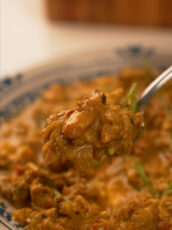
One of the most common dishes you’ll see at those stalls is stir-fried crab with curry powder. A simple, direct preparation where fresh crab gets tossed in a wok with curry powder, egg, and aromatics, and comes out as something deeply fragrant, savory, and almost impossibly good over a bowl of jasmine rice. It is the kind of dish that looks simple until you taste it and realize there is nothing simple about how good it is.
My version is a slight departure from the traditional preparation. I add Thai red curry paste alongside the curry powder, which builds a deeper, more complex base that I think pairs beautifully with the sweet, briny crabs I get here in the Pacific Northwest. The red curry paste adds body, color, and an additional layer of aromatic depth that the powder alone doesn’t quite achieve. The fundamentals are the same. The result is a little more layered.
Which Crab to Use
Pretty much any accessible crab works beautifully in this preparation. I used a red rock crab for this version, which is abundant and affordable on the West Coast and has sweet, delicate meat that suits the curry perfectly. Dungeness crab is equally excellent here, meatier and richer, it holds up to the sauce in a way that makes every bite substantial. Blue crab would work beautifully too, especially if you’re on the East Coast where it’s more readily available.

The one category I’d avoid is the premium crabs. King crab, snow crab, horsehair crab. Those crabs have a flavor and texture that works best with gentler, more restrained seasoning where the crab itself is the entire point. A bold curry paste wok preparation would overpower exactly what makes those crabs worth their price. Save the expensive crabs for preparations that let them speak for themselves. Rock crab, Dungeness, and blue crab are the right call here.
The Two-Minute Cook
Here is the most important thing to understand about this dish before you start: the actual cooking takes about two minutes from the moment the oil hits the wok. Two minutes of fast, high-heat cooking where every ingredient needs to be in the right place at exactly the right moment.
This means mise en place is everything. The crab is already cooked and picked before the wok goes on. The scallions are cut, the garlic is sliced, the eggs are beaten, the curry paste and powder are measured, the stock and fish sauce and palm sugar are sitting next to the stove. Nothing gets prepped once the wok is hot. Everything is ready and waiting.
Set up completely. Then cook fast.
Thai-Style Crab Curry Recipe
Ingredients
- 1 crab, about 1.5-2 lbs (rock crab, Dungeness, or blue crab)
- 3 stalks scallions, cut into 2-inch batons, plus extra thinly sliced for garnish
- 2 cloves garlic, thinly sliced
- 1 tbsp Thai red curry paste
- 2 tsp Thai curry powder
- 1 cup chicken stock
- 1 tbsp fish sauce
- 2 tbsp palm sugar
- 2 eggs, beaten
- Neutral oil, for cooking
- Jasmine rice, to serve
Instructions
Step 1: Cook and Pick the Crab
Kill the crab humanely by stabbing it through the mouth or lifting the tail flap and stabbing through the underside. Steam for about 8 minutes until fully cooked through, or cook using your preferred method.
Once cool enough to handle, pick all the meat from the crab and set aside. Keep the shells if you want them for presentation.

Picking the crab before cooking ensures it disperses evenly through the curry rather than sitting as whole pieces that are hard to coat. It also means the two-minute cook is purely about building flavor rather than cooking the crab through.
Step 2: Mise en Place
Before turning on any heat, have everything staged and ready:
- Scallion batons and sliced garlic in one bowl
- Red curry paste and curry powder measured and ready
- Chicken stock, fish sauce, and palm sugar alongside the wok
- Beaten eggs in a bowl with a fork or chopsticks nearby
- Picked crab meat ready to add

Once the wok is hot, this cook moves very fast. There is no time to measure anything mid-cook.
Step 3: Build the Curry Base
Heat a wok over high heat until smoking. Add about 2 tbsp of neutral oil and fry the scallion batons and sliced garlic for about 30 seconds until fragrant and slightly charred at the edges.
Add the red curry paste and curry powder. Stir fry for 30 seconds to 1 minute until the paste has darkened slightly and the wok fills with a deep, fragrant aroma. The curry paste needs to fry in the hot oil before any liquid goes in to properly bloom its flavor.
Step 4: Add Stock and Season
Pour in the chicken stock and season immediately with fish sauce and palm sugar. Stir to combine and let the sauce come to a quick boil.
Step 5: Add the Crab and Eggs
Add the picked crab meat and toss to disperse it evenly through the curry. The moment it is incorporated, immediately pour in the beaten eggs.

As the eggs begin to scramble and set in the curry, turn off the heat and continue mixing. The residual heat of the wok finishes the eggs gently into a soft, silky scramble that coats the crab and thickens the sauce slightly. Do not leave the eggs on direct heat or they will overcook and become rubbery.
Step 6: Garnish and Serve
Garnish with thinly sliced scallions and serve immediately over jasmine rice.

Tips
- Prep everything before the wok goes on. This cannot be overstated. Two minutes of cooking means there is genuinely no time to find anything once you start. Full mise en place is the only way this dish works.
- Bloom the curry paste properly. The red curry paste needs to fry in hot oil for at least 30 seconds before any liquid is added. Frying activates the fat-soluble flavor compounds in the paste and is what gives the finished curry its depth and color. Adding stock too early produces a pale, flat sauce.
- Turn off the heat before the eggs are fully set. The wok retains significant heat after the flame goes off. If the eggs look fully cooked when you turn off the heat, they are already overcooked. Pull it while they still look slightly underdone and the residual heat will finish them perfectly.
- Don’t use premium crab. King crab, snow crab, and horsehair crab are too expensive and too delicately flavored for a preparation this bold. Rock crab, Dungeness, and blue crab are the right choice — sweet, meaty, and assertive enough to hold their own against the curry.
- Use palm sugar, not white sugar. Palm sugar has a deeper, slightly caramelized sweetness that rounds out the curry in a way white sugar can’t replicate. It is available at most Asian grocery stores and worth seeking out specifically for this dish.
Serving Suggestions
Thai-style crab curry is made to be eaten over jasmine rice and nothing else. The curry sauce, the soft scrambled egg, and the sweet crab meat all need the rice to absorb and carry them. Serve with extra rice on the side because you will want more than one bowl. A simple cucumber salad dressed with rice vinegar and chili alongside cuts through the richness of the curry and resets the palate between bites.
Final Thoughts
The best street food dishes are almost always the ones that look simple and reveal their depth only after you taste them. Thai stir-fried crab with curry powder is that dish. Two minutes of cooking, a handful of ingredients, and a wok hot enough to do the job properly.
The Pacific Northwest gives me exceptional crab. Thailand gave me the best way to cook it.