Recipe Video
🌽 The Corn That Has Lived Rent-Free in My Head for Over a Decade
I haven’t been to Taiwan in over ten years. But if you asked me right now to describe exactly what this corn tastes like, I could do it without hesitating. The char. The paste caramelizing on the grill. The layers of savory seasoning. The hit of something bright at the end that pulls everything together.
Some food just stays with you.
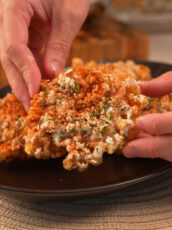
Taiwanese grilled street corn is one of the most flavorful renditions of corn I have ever had. And I say that as someone who thinks about corn more than most people. It is not just grilled corn with toppings, it is a dish where the corn is a vehicle for an intensely savory, layered seasoning experience that builds from the inside out. The paste chars and caramelizes into the kernels. The dry seasoning coats the surface. The vinegar cuts through everything at the very last second.
It is one of the best things you can eat standing up on the side of a street and I have been chasing that memory ever since.
🚏The Street Stall Culture
Part of what makes Taiwanese grilled corn so compelling is that there is no single definitive version. Every street vendor in Taiwan has their own recipe, their own paste, their own methods. Some use cheese as a finishing layer. Some apply three or four different seasoning pastes in sequence, each one building on the last. Some have specialized grilling contraptions that rotate the corn continuously for the most even browning you have ever seen on an ear of corn.

What they all share is the fundamental technique: char the corn aggressively, scrub away the burnt exterior with a wire brush to open up the kernels, then work the seasoning paste into those open kernels layer by layer until the surface becomes a deeply caramelized, sticky, intensely flavored crust.
The scrubbing step is the one most people skip when they try to recreate this at home. It looks extreme. It feels counterintuitive. But it is the most important step in the entire process. The wire brush removes the charred outer layer of each kernel and creates a rough, porous surface that the seasoning paste grips and absorbs into rather than sliding off of. Without it, you are just brushing sauce onto a smooth, waxy surface. With it, you are building flavor directly into the corn.
The Paste
My seasoning paste is built around one foundational ingredient: Bullhead Sacha sauce.

Sacha sauce — sometimes called sha cha sauce or barbecue sauce in Taiwanese cooking — is one of the most versatile condiments in the Chinese pantry. Made from dried shrimp, fish, garlic, shallots, and chili, it has a flavor that is simultaneously savory, slightly sweet, and deeply umami with a subtle seafood backbone that doesn’t announce itself as fishy. It tastes like the concentrated essence of everything good about a Taiwanese barbecue and it is exactly the right foundation for a seasoning paste that needs to carry an entire ear of corn.
Combined with soy paste, oyster sauce, garlic, five-spice, white pepper, peanut butter, and sesame paste, the result is a paste that hits sweet, savory, nutty, and aromatic all at once. The peanut butter and sesame paste add body and richness that helps the paste cling to the corn during the second and third rounds on the grill. Soy paste brings a deeper, more concentrated fermented flavor than regular soy sauce — thicker, slightly sweeter, and more complex in a way that makes a noticeable difference in the finished crust.
The Black Vinegar Finish
The dry seasoning is a blend of Sichuan chili powder, chicken powder, sugar, white pepper, and citric acid that coats the final layer of paste with a savory, slightly spicy, and subtly tart crust. The citric acid in the dry seasoning adds a clean, bright acidity that lifts the whole seasoning profile without introducing any additional liquid to the surface.
But my personal addition — the thing that I think makes this version distinctly mine — is a finishing spritz of Chinkiang black vinegar from a spray bottle.
Black vinegar on a dish this rich and savory sounds like it would clash. It does the opposite. The acidity cuts through the caramelized paste and the fat from the peanut and sesame, and adds a bright, slightly fruity sharpness that makes the whole thing taste more alive. It is the same principle that makes a squeeze of lime on a heavy taco taste essential. The corn is good without the vinegar. Then you add the vinegar and realize it was never complete without it.
Taiwanese Grilled Street Corn Recipe
Yield: 6 ears of corn
Ingredients
Corn
- 6 ears corn
Seasoning Paste
- 45 g (3 tbsp) Bullhead Sacha sauce
- 30 g (2 tbsp) soy paste
- 30 g (2 tbsp) oyster sauce
- 25 g (2 tbsp) sugar
- 30 g (2 tbsp) peanut butter
- 15 g (1 tbsp) sesame paste
- 6 cloves garlic, minced
- ½ tsp white pepper
- ½ tsp five-spice powder
Dry Seasoning
- 5 g Sichuan chili powder
- 5 g chicken powder
- 5 g sugar
- 2 g white pepper
- 1 g citric acid
Optional
- Black (Chinkiang) vinegar in a spray bottle
Instructions
Step 1: Cook the Corn
Steam or boil the corn until fully cooked through. This pre-cook ensures the corn is tender before it ever sees the grill, so the entire grilling process is focused on building char and layering flavor rather than cooking the corn from raw.
Step 2: Make the Seasoning Paste
Combine the Bullhead sacha sauce, soy paste, oyster sauce, sugar, peanut butter, sesame paste, garlic, white pepper, and five-spice until smooth. If the paste is too thick to brush easily, add a small amount of water to thin it to a pancake batter consistency. It should be fluid enough to brush but thick enough to cling.

Step 3: Mix the Dry Seasoning
Combine the Sichuan chili powder, chicken powder, sugar, white pepper, and citric acid in a small bowl. Set aside.

Grilling Method (Recommended)
- Get the charcoal ripping hot. This is not a dish for low and slow. You need intense direct heat to char the corn aggressively in a short amount of time.
- Place a skewer through each corn cob for control and grill until the corn is charred all over, rotating regularly. You want genuine blackening across the entire surface, not just grill marks.
- Remove from the grill. Using a wire brush or stainless steel scrubby, scrub firmly across the entire surface of the corn to remove the charred bits. This opens up the kernels and creates the rough, porous surface the paste needs to grip onto. Brush away the debris.
- Brush the seasoning paste generously over the entire surface, working it into the gaps between kernels.
- Return to the grill and keep the corn moving constantly. The paste burns quickly over high heat. Rotate continuously until the paste has slightly charred and begun to dry at the surface.
- Repeat with another generous layer of paste and grill again until that layer has caramelized and set. You can do this two or three times depending on how intense you want the flavor.
- Remove from the grill and immediately dust with the dry seasoning while the surface is still tacky.
- Spritz with black vinegar and serve immediately.

Air Fryer Method
- Preheat the air fryer to 450°F (230°C).
- Brush each ear of corn generously with the seasoning paste and air fry for 5 minutes.
- Brush on a second layer of seasoning paste and air fry for another 5 minutes until the paste has caramelized and darkened.
- Finish with the dry seasoning and optionally spritz with black vinegar.
The air fryer method skips the charring and wire brush step, so you won’t get the same depth of char or the open kernel texture. The flavor is still excellent and it is the right call when charcoal isn’t an option.

Taiwanese Grilled Street Corn
6
servings20
minutes10
minutesIngredients
- Corn
6 ears corn
- Seasoning Paste
45 (3 tbsp) g Bullhead Sacha sauce
30 (2 tbsp) g soy paste
30 (2 tbsp) g oyster sauce
25 (2 tbsp) g sugar
30 (2 tbsp) g peanut butter
15 (2 tbsp) g sesame paste
6 cloves garlic, minced
1/2 tsp white pepper
1/2 tsp five-spice powder
- Dry Seasoning
5 g Sichuan chili powder
5 g chicken powder
5 g sugar
2 g white pepper
1 g citric acid
- Optional
Black (Chinkiang) vinegar in a spray bottle
Directions
- Cook the Corn
- Steam or boil the corn until fully cooked through. This pre-cook ensures the corn is tender before it ever sees the grill, so the entire grilling process is focused on building char and layering flavor rather than cooking the corn from raw.
- Make the Seasoning Paste
- Combine the Bullhead sacha sauce, soy paste, oyster sauce, sugar, peanut butter, sesame paste, garlic, white pepper, and five-spice until smooth. If the paste is too thick to brush easily, add a small amount of water to thin it to a pancake batter consistency. It should be fluid enough to brush but thick enough to cling.
- Mix the Dry Seasoning
- Combine the Sichuan chili powder, chicken powder, sugar, white pepper, and citric acid in a small bowl. Set aside.
- Grilling Method (Recommended)
- Get the charcoal ripping hot. This is not a dish for low and slow. You need intense direct heat to char the corn aggressively in a short amount of time.
- Place a skewer through each corn cob for control and grill until the corn is charred all over, rotating regularly. You want genuine blackening across the entire surface, not just grill marks.
- Remove from the grill. Using a wire brush or stainless steel scrubby, scrub firmly across the entire surface of the corn to remove the charred bits. This opens up the kernels and creates the rough, porous surface the paste needs to grip onto. Brush away the debris.
- Brush the seasoning paste generously over the entire surface, working it into the gaps between kernels.
- Return to the grill and keep the corn moving constantly. The paste burns quickly over high heat. Rotate continuously until the paste has slightly charred and begun to dry at the surface.
- Repeat with another generous layer of paste and grill again until that layer has caramelized and set. You can do this two or three times depending on how intense you want the flavor.
- Remove from the grill and immediately dust with the dry seasoning while the surface is still tacky.
- Spritz with black vinegar and serve immediately.
- Air Fryer Method
- Preheat the air fryer to 450°F (230°C).
- Brush each ear of corn generously with the seasoning paste and air fry for 5 minutes.
- Brush on a second layer of seasoning paste and air fry for another 5 minutes until the paste has caramelized and darkened.
- Finish with the dry seasoning and optionally spritz with black vinegar.
- The air fryer method skips the charring and wire brush step, so you won’t get the same depth of char or the open kernel texture. The flavor is still excellent and it is the right call when charcoal isn’t an option.
Tips
- Don’t skip the wire brush. It looks aggressive and feels wrong, but it is the most important step in the whole technique. The rough, open surface it creates is what allows the seasoning paste to absorb into the corn rather than just coating it.
- Layer the paste. One application is good. Two or three is significantly better. Each layer builds on the last, caramelizing slightly before the next one goes on, creating a complex, deeply flavored crust that no single application could produce.
- Keep the corn moving on the grill. The sugar content in the paste means it goes from perfectly caramelized to burnt in seconds over high heat. Constant rotation is the only way to get even color without scorching.
- Use Bullhead sacha sauce specifically. There are other sacha sauces on the market but Bullhead is the standard for a reason. The flavor balance of savory, sweet, and nutty is specifically what this paste is built around and substituting a different brand will produce a noticeably different result.
- Use soy paste, not soy sauce. The difference matters. Soy paste is thicker, more concentrated, and slightly sweeter than soy sauce, which helps the paste hold its texture on the corn during grilling rather than thinning out and running off.
- The vinegar spritz is more important than it sounds. A dish this rich and savory needs something bright to cut through it. The black vinegar does that job in a way that no other finishing element can. Keep it in a spray bottle for even, controlled coverage.
Serving Suggestions
Taiwanese grilled corn is a standalone street food experience and it does not need anything alongside it. Eat it immediately, standing up, directly off the skewer. That is the correct way. If you are making it as part of a larger spread, it pairs naturally with other grilled proteins and a cold beer. The dry seasoning and paste mean it is already completely seasoned and needs nothing else on the plate.
Final Thoughts
Some food memories are so specific and so strong that they shape how you think about an ingredient forever. Taiwanese street corn did that for me with corn. It is not the dish I think about when I think about corn at its simplest. It is the dish I think about when I want corn at its most.