Recipe Video
The Korean Stew That Does All the Work Itself
Some of the best food in the world is also the simplest. Not simple in a lazy way, but simple in the way that only comes from a cuisine that has had centuries to figure out exactly which ingredients belong together and in what proportions.
Dakdoritang is that kind of dish.
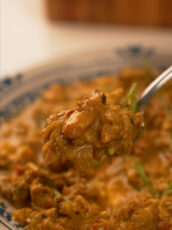
A deeply spiced Korean braised chicken stew built on gochujang, gochugaru, soy sauce, and garlic, with tender chunks of potato and carrot absorbing every bit of flavor from the surrounding broth as the whole thing simmers low and slow. The chicken becomes fall-apart tender. The vegetables soak up the sauce until they taste like the stew itself. The broth thickens into something glossy and rich that you will pour directly over rice and eat until the bowl is clean.
And the active cooking time is about 10 minutes. The rest is the pot doing its job while you do something else.
What Is Dakdoritang?
Dakdoritang (닭도리탕), also called dak bokkeum tang, is a classic Korean braised chicken dish that sits somewhere between a stew and a braise. Chicken pieces are simmered in a sauce built on two kinds of chili, fermented soybean paste, garlic, and a touch of sweetness, with hearty vegetables added partway through so they cook to just the right tenderness without going mushy.
The name has an interesting history. “Dak” means chicken in Korean, while the origin of “doritang” is debated, with some linguists arguing the word has Japanese roots. For that reason some Koreans prefer the name dak bokkeum tang. Whatever you call it, the dish is a staple of Korean home cooking and one of the most comforting things you can put on the table on a cold night.
The flavor profile is built on two pillars:
- Gochujang — fermented red chili paste that brings depth, sweetness, and a slow-building heat
- Gochugaru — Korean red chili flakes that add a brighter, more immediate spice and give the stew its characteristic deep red color
Together they create a sauce that is simultaneously fiery, savory, and slightly sweet in a way that neither ingredient achieves on its own.
Why This Recipe Works
The genius of dakdoritang is in its sequencing. Everything goes into the pot in two stages timed specifically so each component reaches its ideal texture at the same moment:
- Chicken, aromatics, and sauce go in first and simmer for 20 minutes, giving the chicken time to cook through and begin releasing its fat and gelatin into the broth
- Carrots, potatoes, and chilies go in for the final 15 minutes, long enough to become tender and absorb the now-developed sauce without turning to mush
The result is melt-in-your-mouth chicken, perfectly cooked vegetables, and a sauce that has had 35 minutes to become something far greater than the sum of its parts. With boneless chicken thighs specifically, the texture of the chicken by the end of the cook is exceptional. The thighs stay moist and tender in a way that chicken breast never could in this kind of long, simmered application.
Ten minutes of actual work. Thirty-five minutes of patience. One pot to clean.
Spicy Korean Chicken Stew Recipe
Ingredients
- 1 kg chicken thighs
- 4 tbsp soy sauce
- 4 tbsp garlic, minced
- 5 tbsp gochujang
- 5 tbsp gochugaru
- 2 tbsp corn syrup or honey
- 1 large onion, large dice
- 1 carrot, cut into chunks
- 2-3 potatoes, cut into chunks
- 3 Korean green chilies, roughly chopped
- 2-3 stalks green onions, thinly sliced
- Water, to cover
Instructions
Step 1: Season and Start the Stew
In a large heavy-bottom pot, combine the chicken thighs, soy sauce, minced garlic, gochujang, gochugaru, corn syrup or honey, and diced onion. Mix everything together until the chicken is thoroughly coated in the seasoning paste.
Add enough water to just cover the chicken, about 4-6 cups depending on the size of your pot. Bring to a simmer over medium heat.

There is no need to marinate the chicken beforehand. The seasoning paste coats the chicken and begins penetrating immediately as it heats up.
Step 2: Simmer the Chicken
Once the stew reaches a simmer, place the lid on and cook for 20 minutes. The chicken will release its fat and gelatin into the broth during this stage, building the body and depth of the sauce while the chicken cooks through.
Step 3: Add the Vegetables
Add the carrots, potatoes, and Korean green chilies to the pot. Return to a simmer and cook for a further 15 minutes until the vegetables are fully tender and have absorbed the surrounding sauce.

Cut the potatoes and carrots into similar-sized chunks so they cook evenly. Too small and they’ll fall apart. Too large and they won’t cook through in time.
Step 4: Garnish and Serve
Top with thinly sliced green onions and serve immediately with steamed rice or your carb of choice.

Spicy Korean Chicken Stew (Dakdoritang)
6
servings10
minutes35
minutesIngredients
1 kg chicken thighs
4 tbsp soy sauce
4 tbsp garlic, minced
5 tbsp gochujang
5 tbsp gochugaru
2 tbsp corn syrup or honey
1 large onion, large dice
1 carrot, cut into chunks
2-3 potatoes, cut into chunks
3 Korean green chilies, roughly chopped
2-3 stalks green onions, thinly sliced
Water, to cover
Directions
- Season and Start the Stew
- In a large heavy-bottom pot, combine the chicken thighs, soy sauce, minced garlic, gochujang, gochugaru, corn syrup or honey, and diced onion. Mix everything together until the chicken is thoroughly coated in the seasoning paste.
- Add enough water to just cover the chicken, about 4-6 cups depending on the size of your pot. Bring to a simmer over medium heat.
- Simmer the Chicken
- Once the stew reaches a simmer, place the lid on and cook for 20 minutes. The chicken will release its fat and gelatin into the broth during this stage, building the body and depth of the sauce while the chicken cooks through.
- Add the Vegetables
- Add the carrots, potatoes, and Korean green chilies to the pot. Return to a simmer and cook for a further 15 minutes until the vegetables are fully tender and have absorbed the surrounding sauce.
- Cut the potatoes and carrots into similar-sized chunks so they cook evenly. Too small and they’ll fall apart. Too large and they won’t cook through in time.
- Garnish and Serve
- Top with thinly sliced green onions and serve immediately with steamed rice or your carb of choice.
Tips
- Use boneless chicken thighs for the best texture. Bone-in thighs work and add more flavor to the broth, but boneless thighs give you that melt-in-your-mouth tenderness that makes this stew so satisfying. Either works, boneless just delivers a better eating experience.
- Don’t add too much water. The chicken releases significant liquid as it cooks and the sauce will thin out naturally. Starting with just enough water to cover the chicken keeps the final sauce concentrated and flavorful rather than watered down.
- Taste the broth before adding the vegetables. The sauce develops quickly in the first 20 minutes. Taste it before the vegetables go in and adjust salt, sweetness, or spice level while you still have time to correct it.
- Let it simmer, not boil. A rolling boil will make the chicken tough and cloud the broth. A gentle, steady simmer is what gives you tender chicken and a glossy sauce.
- Gochugaru quality matters. Korean red pepper flakes vary significantly in heat level and color depending on brand and freshness. A good gochugaru should be a vivid red and smell almost sweet and fruity rather than purely hot. If yours looks pale or smells flat, it is past its best.
Serving Suggestions
Dakdoritang is made to be eaten with rice. The sauce is the point and rice is the vehicle. Spoon it generously over a bowl of steamed white rice and make sure you get some of the broth with every serving. Beyond rice, it works equally well with glass noodles added directly to the pot in the last few minutes of cooking, or with thick udon noodles served alongside for dipping into the broth. A simple cucumber side salad dressed with sesame oil and rice vinegar alongside cuts through the heat of the stew and resets the palate between bites.
Final Thoughts
Dakdoritang is the kind of recipe that makes weeknight cooking feel less like a task and more like something worth looking forward to. Ten minutes of work and a pot that does the rest. Tender chicken, hearty vegetables, and a deeply spiced sauce that tastes like it has been cooking all day even when it has only been on the stove for 35 minutes.
Simple food, done properly, is almost always the best food. This is proof of that.