Recipe Video
Why 1 + 1 = 3 When It Comes to Tomatoes
There is a principle in flavor science that most people have never heard of but have been experiencing their entire lives without knowing it. Umami synergy. The idea that certain savory compounds, when combined, produce a sensation of savoriness that is significantly greater than either compound could produce on its own. Not additive. Multiplicative.

Tomatoes are natural MSG. Literally. They are one of the highest natural sources of glutamate, the amino acid responsible for the umami sensation, which is exactly why a perfectly ripe tomato tastes so deeply savory despite being a fruit. Glutamate on its own is powerful. But when you pair it with inosinate, the savory compound found in katsuobushi and other dried fish products, or guanylate, found in dried shiitake mushrooms and kombu, the umami sensation amplifies dramatically. One plus one equals three.
That is the entire logic behind this marinade.
Soy sauce for salt and additional glutamate. Kombu for guanylate. Dried shiitake for more guanylate. Katsuobushi for inosinate. Honey for sweetness. Black vinegar for acidity. Korean green chile and garlic for heat and aromatics. Steeped together into a deeply savory, complex marinade and poured over ripe tomatoes for anywhere from a few hours to a full week.

What comes out the other end is a tomato that tastes more like itself than any tomato has a right to. The marinade does not make it taste like soy sauce or fish or mushrooms. It makes it taste like the most concentrated, most savory, most intensely tomato-forward version of itself imaginable.
The Umami Science
Umami synergy is not a new discovery. Japanese cooks have been exploiting it intuitively for centuries. The combination of kombu and katsuobushi in dashi is one of the most famous examples in culinary history. Kombu is rich in glutamate. Katsuobushi is rich in inosinate. Combined in hot water, the resulting broth is dramatically more savory than either ingredient alone. Every Japanese grandmother who has ever made dashi has been doing food science without the terminology.
This marinade applies the same principle to tomatoes. The glutamate already present in a ripe tomato gets amplified by the inosinate from the katsuobushi and the guanylate from both the dried shiitake and the kombu. The soy sauce adds another layer of glutamate on top of that. The result is a marinade that essentially turns the volume up on every savory compound already present in the tomato without masking or replacing the tomato’s own flavor.
The longer you marinate, the more this synergy develops. A few hours gives you a noticeably more savory tomato. Seven days gives you something that is almost impossible to describe to someone who hasn’t tasted it. Start tasting at day three and decide for yourself when it is exactly where you want it.
Marinated Tomatoes Recipe
Ingredients
Marinade
- 200 g soy sauce
- 200 g water
- 45 g honey
- 1 Korean green chile, chopped
- 5 cloves garlic, smashed
- 15 g lemon juice
- 30 g black vinegar
- 5 g kombu
- 10 g dried shiitake
- 5 g katsuobushi
Other
- Tomatoes of your choice, halved or quartered depending on size
- Extra garlic cloves and fresh chiles to marinate alongside the tomatoes
Instructions
Step 1: Build the Marinade
In a pot, combine the soy sauce, water, honey, Korean green chile, garlic, lemon juice, black vinegar, kombu, and dried shiitake.
Bring to a bare simmer over medium-low heat. You want the liquid just barely moving, not boiling. A full boil will drive off volatile aromatics and make the marinade taste flat and one-dimensional.
Turn off the heat and immediately add the katsuobushi. Let steep for 10 minutes. The katsuobushi is delicate and benefits from a gentler extraction than the other ingredients. Steeping off the heat preserves the more subtle inosinate-forward character of the dried fish without extracting bitterness.
Strain through a fine mesh strainer and let the marinade cool completely before using.
Step 2: Marinate
Place the tomatoes in a clean container along with any extra smashed garlic cloves and fresh chiles you want to add. Pour the cooled marinade over the tomatoes until they are fully submerged.
Cover and refrigerate. The tomatoes are good from a few hours and keep for up to 7 days. Taste from day three onward and pull them when they have reached the level of savory intensity you are looking for.
The tomatoes will release liquid as they marinate, which becomes part of the marinade. By day five or six the combined liquid is one of the most flavorful things in your fridge and worth saving separately as a dressing or sauce base.

Marinated Tomatoes
4
servings30
minutes40
minutesIngredients
- Marinade
200 g soy sauce
200 g water
45 g honey
1 Korean green chile, chopped
5 cloves garlic, smashed
15 g lemon juice
30 g black vinegar
5 g kombu
10 g dried shiitake
5 g katsuobushi
- Other
Tomatoes of your choice, halved or quartered depending on size
Extra garlic cloves and fresh chiles to marinate alongside the tomatoes
Directions
- Build the Marinade
- In a pot, combine the soy sauce, water, honey, Korean green chile, garlic, lemon juice, black vinegar, kombu, and dried shiitake.
- Bring to a bare simmer over medium-low heat. You want the liquid just barely moving, not boiling. A full boil will drive off volatile aromatics and make the marinade taste flat and one-dimensional.
- Turn off the heat and immediately add the katsuobushi. Let steep for 10 minutes. The katsuobushi is delicate and benefits from a gentler extraction than the other ingredients. Steeping off the heat preserves the more subtle inosinate-forward character of the dried fish without extracting bitterness.
- Strain through a fine mesh strainer and let the marinade cool completely before using.
- Marinate
- Place the tomatoes in a clean container along with any extra smashed garlic cloves and fresh chiles you want to add. Pour the cooled marinade over the tomatoes until they are fully submerged.
- Cover and refrigerate. The tomatoes are good from a few hours and keep for up to 7 days. Taste from day three onward and pull them when they have reached the level of savory intensity you are looking for.
- The tomatoes will release liquid as they marinate, which becomes part of the marinade. By day five or six the combined liquid is one of the most flavorful things in your fridge and worth saving separately as a dressing or sauce base.
Tips
- Use the ripest tomatoes you can find. The marinade amplifies what is already in the tomato. A ripe, in-season tomato marinated in this liquid becomes extraordinary. An underripe, out-of-season tomato becomes a better version of itself but never reaches the same ceiling. This recipe is worth saving for peak tomato season.
- Don’t boil the marinade. A bare simmer is the maximum. Boiling destroys delicate aromatic compounds and produces a harsher, more one-dimensional extraction. Low and slow is the only way to get a clean, nuanced marinade.
- Add the katsuobushi off the heat. Boiling katsuobushi extracts bitterness. Steeping it in hot but not boiling liquid gives you the inosinate extraction you want without the off flavors.
- Cool completely before adding the tomatoes. Hot marinade begins cooking the tomatoes and changes their texture from firm and fresh to soft and stewed. The goal is a marinated raw tomato, not a braised one. Let the liquid come fully to room temperature before it touches the fruit.
- Save the marinade after the tomatoes are gone. By the end of the marinating period the liquid is deeply flavorful and complex. Strain it and use it as a dressing, a dipping sauce, a noodle seasoning, or a base for a vinaigrette. Nothing gets wasted.
Serving Suggestions

Marinated tomatoes work in almost any context where a ripe tomato would be welcome, but dramatically better:
As a standalone side — sliced and plated with a drizzle of good olive oil, flaky salt, and fresh herbs. The most direct expression of what the marinade does.
Over rice — spooned over a bowl of hot steamed rice with a drizzle of sesame oil and a soft boiled egg. One of the best quick meals you can make from a jar in your fridge.
With cold noodles — tossed through cold soba or glass noodles with the reserved marinade as a dressing, cucumber, and scallion.
On toast — thick slices on toasted sourdough with Kewpie mayo and fresh shiso. The Japanese-inflected tomato on toast nobody knew they needed.
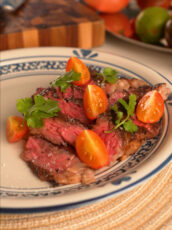
Alongside grilled meats or fish — served as a condiment next to a grilled steak or chicken thigh the same way you would serve a salsa or chimichurri. The savory depth of the marinated tomato cuts through charred fat in exactly the right way.
Final Thoughts
The best flavor combinations are the ones that have a reason for working beyond just taste. Marinated tomatoes in a dashi-inspired, umami-forward brine is not a random combination. It is a scientifically sound one. The compounds in the marinade are specifically chosen to amplify what is already in the tomato rather than cover it up.
One plus one equals three. Make the marinade, wait a few days, and taste the result. Then try to explain it to someone who hasn’t had it yet.
Good luck.