Recipe Video
What Is Banana Mochi?
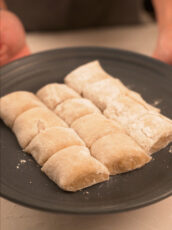
Banana mochi, or 香蕉糕 (xiāng jiāo gāo), is a Chinese-style steamed glutinous rice cake made from mashed overripe bananas, glutinous rice flour, and a small amount of regular rice flour. The result is a soft, chewy dough with a texture that sits somewhere between mochi and a steamed cake. It’s pliable and bouncy with a natural sweetness and aroma from the bananas.
The toasted glutinous rice flour coating is what makes it a proper mochi experience. Lightly toasted in a dry pan until it takes on a faint golden hue and a nutty fragrance, it prevents the sticky dough from clinging to everything it touches and adds a subtle toasty flavor on the outside that contrasts beautifully with the soft, banana-forward interior.
It is a dessert built entirely on the principle of using what you have. Overripe bananas are the most important ingredient and the more overripe they are, the better the final result.

Banana Mochi Recipe
Ingredients
Banana Mochi Dough
- 3-4 overripe bananas (about 280-300 g peeled weight)
- 60 g granulated sugar
- 10 g neutral oil
- 80 g water
- 150 g glutinous rice flour
- 50 g rice flour
Toasted Flour
- 50 g glutinous rice flour
Instructions
Step 1: Make the Batter
Place the overripe bananas in a large bowl and mash thoroughly into a smooth paste. The riper the bananas, the easier this step is and the better the final result will taste.
Add the sugar, neutral oil, and water and mix until combined. Add the glutinous rice flour and rice flour and mix until a thick, smooth batter forms with no dry flour remaining.
Step 2: Steam
Transfer the batter to a greased heatproof bowl or pan and steam over medium heat for 25 minutes until the dough is fully cooked through and has changed from an opaque white to a slightly translucent, set consistency.
Step 3: Toast the Flour
In a dry pan over medium-low heat, toast the 50 g of glutinous rice flour stirring constantly until it takes on the faintest yellow hue and smells lightly nutty and toasty, about 3-5 minutes. Remove from the heat and set aside to cool completely. This is your dusting flour and it needs to be ready before the dough comes out of the steamer.
Don’t rush this step and don’t walk away from the pan. The flour goes from perfectly toasted to burnt quickly and once it is burnt the flavor becomes bitter and unpleasant. Low heat and constant attention is the only way to get it right.
Step 4: Knead
Remove the dough from the steamer while still hot. Using a spoon or spatula, knead the dough vigorously inside the bowl, folding and pressing it against the sides, until it becomes smooth, elastic, and begins to pull away cleanly from the sides of the bowl, about 3-5 minutes.

This step needs to happen while the dough is still hot. As the dough cools it becomes significantly harder to work and the final texture will be uneven. Work quickly and don’t wait for it to cool down before kneading.
Step 5: Shape
Heavily dust a clean work surface with the toasted glutinous rice flour. Turn the dough out onto the flour and dust the top and sides generously. Every surface of the dough should be coated in flour to prevent sticking.
Using a rolling pin, roll the dough into a rectangle about 0.5 cm (¼ inch) thick. Keep dusting with toasted flour as needed throughout rolling.

From the long side, roll the dough up tightly into a long log. Cut into your desired shapes and sizes with a sharp knife or bench scraper, dusting between cuts to keep the pieces from sticking together.

Banana Mochi (香蕉糕): A Taste of My Childhood
4
servings10
minutes25
minutesIngredients
- Banana Mochi Dough
3 overripe bananas (about 280-300 g peeled weight)
60 g granulated sugar
10 g neutral oil
80 g water
150 g glutinous rice flour
50 g rice flour
- Toasted Flour
50 g glutinous rice flour
Directions
- Make the Batter
- Place the overripe bananas in a large bowl and mash thoroughly into a smooth paste. The riper the bananas, the easier this step is and the better the final result will taste.
- Add the sugar, neutral oil, and water and mix until combined. Add the glutinous rice flour and rice flour and mix until a thick, smooth batter forms with no dry flour remaining.
- Steam
- Transfer the batter to a greased heatproof bowl or pan and steam over medium heat for 25 minutes until the dough is fully cooked through and has changed from an opaque white to a slightly translucent, set consistency.
- Toast the Flour
- In a dry pan over medium-low heat, toast the 50 g of glutinous rice flour stirring constantly until it takes on the faintest yellow hue and smells lightly nutty and toasty, about 3-5 minutes. Remove from the heat and set aside to cool completely. This is your dusting flour and it needs to be ready before the dough comes out of the steamer.
- Knead
- Remove the dough from the steamer while still hot. Using a spoon or spatula, knead the dough vigorously inside the bowl, folding and pressing it against the sides, until it becomes smooth, elastic, and begins to pull away cleanly from the sides of the bowl, about 3-5 minutes.
- Shape
- Heavily dust a clean work surface with the toasted glutinous rice flour. Turn the dough out onto the flour and dust the top and sides generously. Every surface of the dough should be coated in flour to prevent sticking.
- Using a rolling pin, roll the dough into a rectangle about 0.5 cm (¼ inch) thick. Keep dusting with toasted flour as needed throughout rolling.
- From the long side, roll the dough up tightly into a long log. Cut into your desired shapes and sizes with a sharp knife or bench scraper, dusting between cuts to keep the pieces from sticking together.
Tips
- Use the ripest bananas you have. Blackened skin is ideal. The more overripe the banana, the sweeter, more fragrant, and more flavorful the finished mochi will be. Barely ripe bananas produce a noticeably blander result.
- Work fast after steaming. The kneading and shaping need to happen while the dough is still hot and pliable. Cold mochi dough becomes stiff and difficult to work with. Have your toasted flour ready and your work surface prepared before the dough comes out of the steamer.
- Be generous with the toasted flour. Glutinous rice dough is extremely sticky. More flour than you think you need is the right amount. A surface that isn’t heavily dusted will have the dough stuck to it within seconds.
- Cut cleanly. A sharp knife or bench scraper dusted with toasted flour between each cut gives you clean, defined pieces. A dull knife drags through the dough and compresses the edges.
- Eat the same day for the best texture. Mochi is at its chewiest and most satisfying fresh. Stored in an airtight container it keeps for 1-2 days at room temperature but the texture firms up over time. A quick 10-second microwave brings it back close to its original texture if it has stiffened.
Serving Suggestions
Banana mochi is a standalone snack exactly as it is. It needs nothing else alongside it and is best eaten at room temperature where the chew is at its most satisfying. For a dessert presentation, a light dusting of toasted sesame seeds over the toasted flour coating adds a nutty fragrance that complements the banana. A cup of hot jasmine tea or hong kong milk tea alongside is the natural pairing and the one my grandma always served it with.
Final Thoughts
The best recipes in any family’s repertoire are usually not the complicated ones. They are the ones made from what was already in the kitchen, put together without much deliberation, and eaten without much ceremony. My grandma’s banana mochi was that recipe. Overripe bananas, rice flour, a steamer, and about 45 minutes of mostly hands-off time.
It tasted like something she had made a hundred times because she had. And now every time I make it, it tastes like her kitchen.
Some recipes are worth keeping for reasons that have nothing to do with technique.